
Rivian R1T trim levels change charging, tire and service decisions
Rivian R1T trim levels change battery, wheel and equipment choices; compare those decisions with charging access, service needs and the hauling tasks you actually perform.
Identify the complete U.S. configuration on the order before comparing maximum range or upgraded output. A commuter truck and a vehicle used for regular towing need different assessments; preserve battery, tires and driven-motor arrangement together in each proposal.
Read Rivian R1T trim levels through the truck’s work plan 📋
The Premium Dual reference has one motor at each axle. Its standard output is distinct from the optional Power Upgrade. Ask whether a vehicle actually includes that upgrade before using upgraded performance numbers to assess its price or capability.
Comparing Rivian R1T trim levels starts with the jobs the truck must complete. Document passengers, regular cargo, trailer use and daily distance. More output does not answer whether the chosen truck has the load allowance, charging routine or parking access that your work requires.
The comparison of Tacoma Trailhunter equipment provides a different pickup reference for regular trail or hauling tasks. Keep its fuel, servicing and load limits separate from the Rivian’s; judge optional equipment by the work it performs, rather than treating appearance as proof of capability.
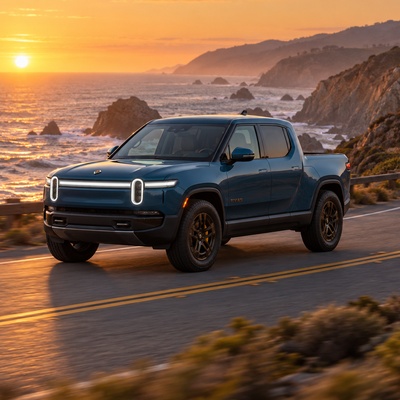
Battery and wheels across Rivian R1T trim levels 🔋
The Large and Max battery labels should remain attached to their respective published ranges. Wheel and tire choices also matter to the manufacturer’s range assumptions. Confirm the complete combination rather than pairing the longest advertised range with a different wheel package. A pickup comparison provides a gasoline-truck perspective, with different operating requirements.
Maintenance differences across Rivian R1T trim levels 🔧
An electric drivetrain does not eliminate tire, brake or chassis inspections. Rivian publishes an R1 maintenance schedule and specifies rotation at 9,000 miles where tire sizes match. Verify the applicable instructions for the fitted set rather than assuming every wheel package can follow the same rotation pattern.
Request a price for replacing the chosen tires before selecting an appearance or off-road package. Include installation, alignment assessment and any service relevant to that set. The purchase price of wheels does not reveal the eventual replacement bill or whether a nearby provider can perform the required work.
If you use online vehicle financing, obtain the complete borrowing proposal after selecting battery, wheels and options. A configuration change can alter the purchase amount; keep payment, APR and total interest separate from charging costs, tire replacement and service expenses.
Checks that connect equipment to daily ownership 📋
These questions are especially useful before adding optional hardware. Record the answers with the configuration so later changes trigger a fresh review rather than an assumption that the budget still holds.
- Charging: confirm where the truck will charge and the installation scope for any home equipment.
- Tires: identify size, load rating, rotation instructions and a local replacement source.
- Service: check appointment access, travel distance and transport arrangements during repairs.
- Cargo: account for people and accessories within the actual vehicle’s loading limits.
- Subscriptions: separate included functions from optional continuing services and their renewal terms.
Compare capability without buying an unused advantage 📊
Use the actual configuration when obtaining insurance and checking charging equipment. A generic quote for an electric pickup cannot capture every selected option or household circumstance. Keep the insurance coverage and deductible consistent when comparing versions.
A useful assessment of Rivian R1T trim levels also considers travel time. A service center or charging stop can impose a practical burden even when the direct price is acceptable. The existing truck guide offers configuration context; your routes determine whether that combination works well.
Ownership checks when comparing Rivian R1T trim levels 🧮
| Selection | Question to resolve | Evidence |
| Battery | Does the expected route fit the charging plan? | Configuration and route assessment |
| Wheel package | Can tires be serviced and replaced conveniently? | Tire specification and local estimate |
| Performance option | Will its capability serve a regular task? | Itemized order and demonstration |
| Truck accessories | How do they affect loading and coverage? | Vehicle labels and insurer response |
The value of an upgrade depends on the problem it solves. Avoid treating a larger battery as a substitute for checking charging availability or a more powerful motor arrangement as proof that every towing task is suitable.
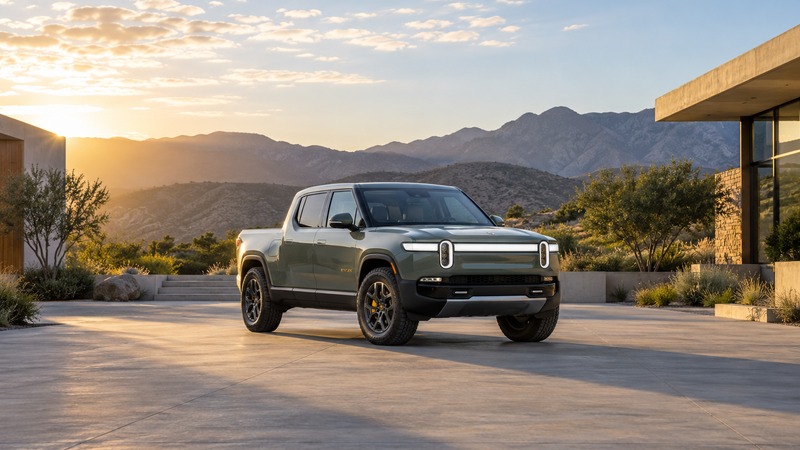
Premium Dual Large U.S. configurator reference ⚙️
| Specification | Current identified configuration |
| Propulsion / drive | Dual electric motors / AWD |
| Standard output / torque | 533 hp / 610 lb-ft |
| Battery designation / EPA-estimated range | Large / 329 miles |
| Optional Max battery range | 420 miles EPA-estimated; separate option |
| Overall length / wheelbase | 217.1 / 135.8 inches |
| Width, mirrors extended / folded | 88.4 / 82.0 inches |
| Minimum / maximum height | 72.7 / 78.2 inches |
| Bed dimensions | 54.2 × 51.1 × 18.3 inches |
| Bed / Gear Tunnel volume | 29.2 / 11.7 cu ft |
| Seating | Five |
These dimensions help assess parking and loading; the adjustable height requires attention to the actual suspension setting. Battery designation is not a usable-capacity figure in kWh. Range remains a standardized estimate affected by conditions, load, accessories and the selected tires.
Order the combination that earns its continuing costs 🔑
Choose among Rivian R1T trim levels after checking the practical costs around the truck. Preserve the exact order, a workable charging arrangement and estimates for insurance and tires. Leave room in the budget for needs that a high performance rating cannot settle.
Before taking delivery, compare the equipped truck with that order and confirm model year on its documentation. After ownership begins, review charging records and service experience. Actual travel and loading habits offer a better basis for future accessory decisions than a task you rarely perform.
FAQ ❓
1. Does the optional Power Upgrade describe every Dual truck?
No. Confirm whether it is included and enabled for the vehicle being purchased.
2. Is the Max battery range the Large battery rating?
No. Keep the battery designation and its stated range together.
3. Are all tire sets rotated in the same way?
No. Follow the instructions for the fitted tires; Rivian’s rotation entry specifies matching sizes.
4. Does the current page prove a used truck’s model year?
No. Check the VIN, original configuration and vehicle documents.
5. Where can I compare current manufacturer configurations?
Use Rivian’s U.S. comparison tool and preserve the selected motor, battery and wheel details.
