
Auto Financing 0 Down: How to Avoid Hidden Fees
Start comparing auto financing 0 down offers today: check the real costs, review terms carefully, and see if this option truly fits your budget before applying.
Many lenders promote zero-down deals as accessible solutions for bad credit borrowers, yet the real cost is often buried in the fine print.
Analyze the details, avoid hidden fees, and choose a financing option that protects your finances and prevents overpaying in the long run.
How Auto Financing 0 Down Really Works in the US 💳
At first glance, auto financing 0 down seems like the perfect solution—no upfront payment and immediate access to a vehicle. This is especially appealing for buyers with limited savings or damaged credit profiles.
However, what replaces the down payment is usually a higher loan amount. Lenders compensate for the increased risk by adjusting interest rates, loan terms, or adding fees. This means you’re not avoiding costs—you’re simply redistributing them over time.

Where Hidden Fees Usually Appear in auto financing 0 down Deals 🔍
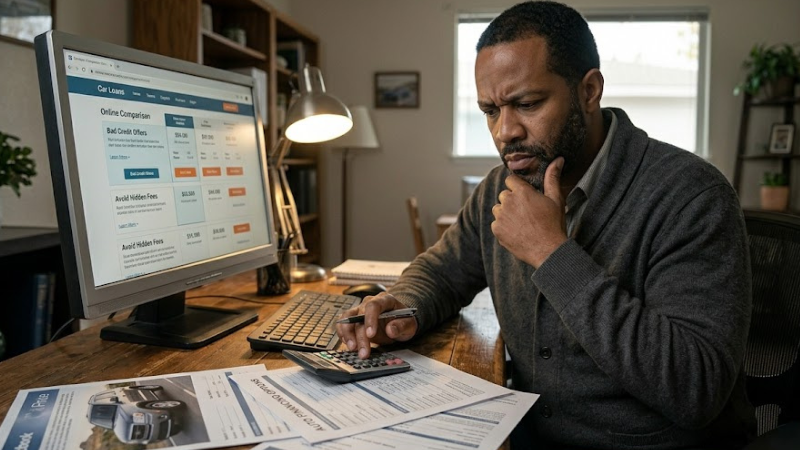
When evaluating auto financing 0 down, it’s essential to look beyond the monthly payment and identify where lenders might embed extra costs.
Common hidden fees include:
- Loan origination or processing fees
- Dealer markups on interest rates
- Add-ons like extended warranties or GAP insurance
- Higher APR due to risk-based pricing
These elements can significantly increase the total cost of your vehicle, even if the monthly payment looks manageable.
Interest Rate Inflation: The Silent Cost 📈
One of the most common tactics in zero-down financing is increasing the interest rate. Since the lender takes on more risk without an upfront payment, they offset it by charging more over time.
Key points to watch:
- Subprime borrowers often face double-digit APRs
- Longer loan terms amplify total interest paid
- Small rate differences can mean thousands over time
This is where many buyers unknowingly overpay.
Loan Term Extension and Its Impact ⏳
Another strategy lenders use is extending the loan duration. While this lowers monthly payments, it increases the total cost of the loan.
Important considerations:
- Terms can reach 72 to 84 months
- Longer loans delay equity building
- Higher risk of negative equity
This structure can trap borrowers in a cycle where they owe more than the car is worth.
Dealer Add-Ons You Didn’t Ask For 🧾
Dealerships often bundle extras into financing agreements without clearly explaining them. These add-ons can inflate your loan significantly.
Watch for:
- Service contracts and warranties
- Paint protection or maintenance plans
- Credit insurance products
Always request a full breakdown before signing anything.
How to Protect Yourself When Choosing auto financing 0 down 🛡️
Even though auto financing 0 down can be useful, especially in urgent situations, you need a strategy to avoid unnecessary costs.
Start by comparing multiple lenders. Online platforms often provide clearer breakdowns than dealerships, helping you spot inflated fees. Pre-qualification tools can also give you a realistic expectation of rates without affecting your credit score.
Another key step is negotiating—not just the car price, but also the financing terms. Many buyers don’t realize that interest rates and add-ons are often negotiable.
Comparison Table: Zero Down vs. Traditional Financing 📊
| Feature | Zero Down Financing | Traditional Financing |
| Upfront Cost | $0 | 10%–20% of vehicle price |
| Monthly Payment | Lower initially | Moderate |
| Interest Rate | Higher | Lower |
| Total Loan Cost | Higher | Lower |
| Risk of Negative Equity | High | Lower |
This comparison highlights why zero-down deals require careful evaluation.
Advantages and Disadvantages of Zero-Down Deals ⚖️
Before choosing auto financing 0 down, weigh the pros and cons carefully.
Advantages:
- No upfront financial burden
- Faster access to a vehicle
- Useful for emergencies
Disadvantages:
- Higher total cost
- Increased interest rates
- Greater financial risk long-term
Understanding this balance helps you make a more informed decision.
When Auto Financing 0 Down Makes Sense 🤔
There are situations where zero-down financing is justified. If you urgently need a car for work or lack savings, this option can provide immediate mobility.
However, it works best when combined with a clear plan—such as refinancing later or making extra payments to reduce interest costs. Without a strategy, the convenience can quickly turn into a financial burden.
Smart Decisions Beat Zero Entry 💡
Choosing auto financing 0 down is not inherently bad—but it requires awareness and planning. The absence of a down payment doesn’t eliminate costs; it simply shifts them into less visible areas.
By analyzing loan terms, questioning every fee, and comparing lenders, you can turn a risky offer into a manageable opportunity. The goal is not just to get approved—but to do so without compromising your financial future.
FAQ ❓
Is zero-down car financing really free?
- No. Costs are usually transferred into higher interest rates or hidden fees.
Can I get approved with bad credit?
- Yes, many lenders accept lower scores, but expect stricter terms.
Are online lenders safer than dealerships?
- Often yes, because they provide clearer comparisons and fewer bundled add-ons.
Can I refinance later?
- Yes, refinancing can reduce your rate after improving your credit profile.
What’s the biggest risk of zero-down financing?
- Paying significantly more over time due to interest and extended loan terms.
