
Toyota RAV4 SUV vs Compact Sedans: When the Upgrade Is Worth It
Compare a compact sedan with the Toyota RAV4 suv today and discover whether the extra space and features truly fit your budget and financing options.
Many US buyers with imperfect credit wonder if upgrading is financially smart or risky.
Analyze total costs, explore financing scenarios, and take action now to choose the option that delivers the best long-term value for your money.
Why upgrading from compact sedans to a Toyota RAV4 SUV can change your budget strategy 🚗
Moving from a sedan like a Toyota Corolla or Hyundai Elantra to a Toyota RAV4 SUV is not just about size—it changes your financing structure, insurance costs, and even your approval odds. Typically, SUVs come with higher purchase prices, which means higher loan amounts and potentially stricter lender requirements.
However, the value equation shifts when you consider versatility, resale value, and demand. SUVs like the Toyota RAV4 tend to retain value better in the US market, which can offset higher monthly payments over time.
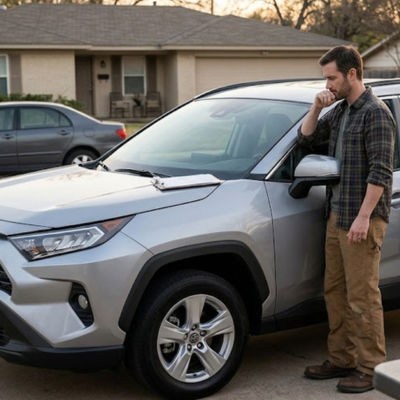
Key financial differences between compact sedans and SUVs in the US market 💰
The decision between sedans and SUVs becomes clearer when you break down costs:
- Purchase price: Compact sedans usually start between $22,000–$27,000, while SUVs like the RAV4 range from $30,000–$38,000.
- Insurance costs: SUVs often cost 10–20% more to insure depending on location and coverage.
- Fuel efficiency: Sedans still win here, but modern SUVs are closing the gap.
- Resale value: SUVs typically depreciate slower in high-demand segments.
These factors directly affect how lenders assess risk, especially for buyers with bad credit.
When a Toyota RAV4 SUV becomes a smarter financial move 📊
Choosing a Toyota RAV4 SUV can be the right decision under specific conditions, especially if you are planning long-term ownership.
- Higher mileage usage: If you drive frequently, the comfort and durability of an SUV can justify the extra cost.
- Family needs: More space means fewer compromises and better practicality.
- Resale strategy: SUVs like the RAV4 maintain strong resale value, helping reduce total ownership cost.
This transition becomes even more strategic when paired with the right financing structure.
Financing scenarios where upgrading to an toyota rav4 suv makes sense 🔑
For buyers with credit challenges, upgrading to an SUV is not always a bad idea if done strategically.
- Stable income verification: Lenders prioritize consistent income over perfect credit scores.
- Down payment flexibility: Even 10–15% can significantly improve approval chances.
- Loan term optimization: Avoid extending beyond 72 months to limit total cost.
Situations where staying with a sedan is financially safer ⚠️
There are also cases where choosing a sedan is the smarter move.
- Tight monthly budget: If payments exceed 30–35% of your income, risk increases.
- High APR offers: Bad credit loans above 20% APR can make SUVs too expensive.
- Short-term ownership plans: Sedans may offer better short-term affordability.
Cost-of-ownership comparison factors you should not ignore 🧾
Beyond the sticker price, long-term costs matter.
- Maintenance costs: SUVs may have slightly higher service costs.
- Fuel consumption: Sedans remain more efficient in city driving.
- Insurance premiums: Larger vehicles often increase premiums.
Understanding these variables ensures your upgrade decision is grounded in reality.
Technical comparison: Toyota RAV4 vs compact sedan benchmarks 📋
| Specification | Toyota RAV4 (2025) | Compact Sedan (Average) |
| Engine | 2.5L 4-cylinder | 1.8L–2.0L 4-cylinder |
| Horsepower | ~203 hp | ~130–160 hp |
| Transmission | 8-speed automatic | CVT/automatic |
| MPG (combined) | ~30 MPG | ~35–40 MPG |
| Cargo Space | ~69.8 cu ft | ~13–15 cu ft trunk |
| Drivetrain | FWD/AWD | FWD |
| Seating | 5 passengers | 5 passengers |
Data verified: 2026
Advantages and trade-offs of choosing an toyota rav4 suv over a sedan ⚖️
Choosing a Toyota RAV4 SUV comes with clear benefits but also important trade-offs.
- Advantages 🚀:
- Better driving position and visibility
- More cargo and passenger space
- Strong resale value in the US market
- Disadvantages ⚠️:
- Higher upfront and monthly costs
- Slightly lower fuel efficiency
- Higher insurance premiums
Balancing these factors is essential before committing to a loan.

Financing strategy insights for SUV upgrades with bad credit 📉
When considering a Toyota RAV4 SUV, financing strategy becomes critical, especially for borrowers with low credit scores.
Lenders in the US typically evaluate income stability, debt-to-income ratio (DTI), and down payment more heavily than credit score alone. This means you can still qualify for an SUV loan if your financial profile shows consistency.
Additionally, comparing at least three to five lenders can significantly reduce your interest rate, even with a challenging credit history.
Financing comparison table: sedan vs SUV loan scenarios 📊
| Scenario | Compact Sedan Loan | Toyota RAV4 SUV Loan |
| Vehicle Price | $25,000 | $33,000 |
| APR (bad credit) | 14% | 16% |
| Loan Term | 60 months | 72 months |
| Monthly Payment | ~$580 | ~$720 |
| Total Cost | ~$34,800 | ~$51,800 |
Data verified: 2026
When the upgrade to an SUV aligns with your long-term financial goals 🎯
Upgrading to a Toyota RAV4 SUV is not just about immediate comfort—it should align with your long-term financial planning. If you expect stable income growth, plan to keep the vehicle for several years, and need the additional space, the upgrade can be justified despite higher monthly payments.
On the other hand, if your financial situation is uncertain, starting with a compact sedan and refinancing later may be the smarter path.
Strategic conclusion: making the right choice between SUV and sedan 🚘
Choosing between a sedan and a Toyota RAV4 SUV ultimately depends on your financial stability, driving needs, and long-term plans. The upgrade is worth it when it enhances your lifestyle without putting pressure on your budget.
Careful planning, realistic expectations, and smart financing choices are what transform an SUV purchase from a financial risk into a strategic investment.
FAQ ❓
Is it harder to finance an SUV with bad credit in the US?
- Yes, because SUVs are more expensive, lenders may require stronger income proof or higher down payments.
Does a Toyota RAV4 hold value better than compact sedans?
- Generally, yes. SUVs like the RAV4 have strong resale demand in the US market.
What is a safe monthly payment percentage for car financing?
- Experts recommend keeping your car payment below 30–35% of your monthly income.
Is fuel cost significantly higher for SUVs compared to sedans?
- It can be slightly higher, but modern SUVs have improved efficiency, reducing the gap.
Should I choose a longer loan term to afford an SUV?
- Only if necessary. Longer terms lower monthly payments but increase total interest paid.
