
Motorcycle Loan Refinance: Learn How to Restructure Your Bike Loan and Potentially Pay Less
Learn how motorcycle loan refinance can restructure your current financing and see what to compare before replacing your existing motorcycle loan.
A motorcycle loan refinance can give riders an opportunity to reconsider financing decisions made when they originally purchased their bike.
By replacing an existing loan with a new agreement, qualified borrowers may obtain a different interest rate or create a monthly payment that better fits their current budget.
Refinancing can be particularly relevant when a rider’s financial profile has improved or when the original motorcycle financing was relatively expensive.
Discover the best motorcycles for beginners that make learning enjoyable while offering reliability, comfort, and long-term value.
What Happens When You Refinance a Motorcycle Loan? 🏍️
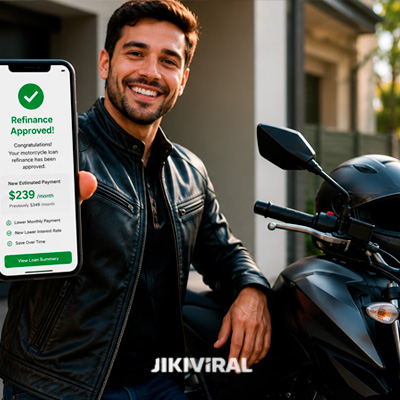
When refinancing is completed, a new financing agreement generally replaces the existing motorcycle loan.
The remaining balance on the original financing is paid off, and the rider begins making payments according to the conditions established by the replacement loan.
This does not eliminate motorcycle debt.
Instead, it restructures how the remaining debt will be repaid. For that reason, riders should identify exactly what they want to accomplish before searching for a new lender.
One person may want to reduce the interest rate without extending the repayment period.
Another rider may prioritize a smaller monthly payment because household expenses have changed.
A third borrower may prefer a shorter term that allows the motorcycle to be paid off sooner.
Four Different Goals for Motorcycle Loan Refinance 🎯
Depending on the borrower’s circumstances, refinancing may be used to pursue:
- Lower interest costs through a potentially more competitive APR.
- Reduced monthly payments through a different loan structure.
- Faster motorcycle payoff by selecting a shorter repayment period.
- Simplified financial management by moving the loan to a preferred financial institution.
These objectives should not be treated as interchangeable.
The loan producing the lowest payment may not produce the lowest total cost, while the loan offering the fastest payoff may require significantly higher installments.

Know Your Break-Even Point Before Refinancing Your Bike 💰
Before submitting a motorcycle loan refinance application, determine how much financial improvement is necessary for the process to make sense.
Start by obtaining the current payoff amount from your existing lender.
Then calculate approximately how much you would pay if you continued with the original agreement until the balance was eliminated.
Next, compare that amount with the complete estimated cost of potential refinancing, including interest and applicable fees.
If refinancing costs $500 in fees but produces only $300 in projected savings, the new agreement may not provide a meaningful financial advantage.
Conversely, a substantial rate reduction on a larger remaining balance could potentially create more significant savings.
Choosing Between a Lower Payment and Faster Motorcycle Payoff ⏳
One of the most important decisions when considering motorcycle loan refinance is selecting the new repayment term.
A longer loan can reduce the monthly payment, potentially creating additional room in the household budget.
However, extending repayment may result in additional interest expenses and keep the motorcycle financed for longer.
A shorter term generally increases the payment but can accelerate debt elimination and potentially reduce total interest.
Where to Compare Motorcycle Refinancing Options 🏦
Finding the right refinancing source may require more research than obtaining a traditional car loan.
Some financial institutions finance automobiles but do not refinance motorcycles, while others establish specific eligibility requirements for powersports vehicles.
Comparing several lender categories can increase the chances of finding an option aligned with your financial profile and motorcycle.
Traditional banks may provide motorcycle or recreational vehicle lending to qualified applicants. Existing customers can start with their current institution while still researching alternatives.
Eligible members may find motorcycle financing through credit unions. Loan availability, membership requirements, and underwriting standards differ among institutions.
Digital platforms can simplify applications and preliminary research. Borrowers should verify lender legitimacy and review complete terms carefully.
Some financing companies specialize in motorcycles, ATVs, and recreational vehicles and may provide products designed specifically for these assets.
Comparing multiple possibilities can provide a broader understanding of available rates and repayment structures.
Ready to own a Harley-Davidson? Explore Harley-Davidson financing programs and discover how to make your next motorcycle more affordable.
Which Motorcycles May Be Considered for Refinancing? 🚦
Motorcycle refinancing is not limited to one style of bike.
Depending on lender requirements, riders may seek refinancing for cruisers, touring motorcycles, adventure bikes, sport motorcycles, and other categories.
Higher-priced motorcycles can create particularly important refinancing decisions because substantial balances may remain several years after purchase.
The relationship between the outstanding loan balance and motorcycle value can become an important factor in refinancing.
Imagine a motorcycle originally purchased for $25,000 that now has an estimated market value of $16,000 while the rider still owes $20,000.
The outstanding balance exceeds the approximate value of the motorcycle, potentially making refinancing more difficult with certain lenders.
Riders should therefore estimate the current motorcycle value before applying.
Information may include:
- Manufacturer and model
- Model year
- Vehicle identification number
- Current mileage
- Motorcycle condition
- Existing lender
- Current payoff amount
- Estimated market value
- Title information
Accurate information helps lenders evaluate the motorcycle securing the new financing agreement.
Prepare Your Application Before Contacting Refinance Lenders 📄
Once you understand your existing loan and motorcycle value, review your current financial profile.
Lenders may consider income, employment, existing financial obligations, and credit history during underwriting.
Borrowers whose financial circumstances have improved since the original purchase may encounter different financing possibilities than they had previously.
Gather commonly requested documentation and establish a specific refinancing target before applying.
For example, instead of simply saying, “I want a better loan,” determine that you want to reduce your APR without extending repayment beyond the number of months currently remaining.
A clear objective makes comparing offers considerably easier.
When Motorcycle Loan Refinance May Not Be the Right Move ⚠️
Refinancing does not provide meaningful value in every situation. Riders with only a few payments remaining may find that potential savings are too small to justify replacing the loan.
A new agreement may also be less attractive if refinancing fees consume most of the projected interest savings.
Extending repayment excessively is another potential concern.
Restarting a long-term loan after already making years of payments can leave the rider financing an older motorcycle much longer than expected.
Finally, riders planning to sell or trade their motorcycle in the near future should carefully consider if refinancing provides enough benefit during the short remaining ownership period.
Ready to ride sooner? Discover the best motorcycle loans strategies that can help lower costs and improve approval odds.
Build a Motorcycle Loan Refinance Strategy Around Real Savings 🚀
The strongest motorcycle loan refinance strategy begins with understanding exactly what you owe today and how much your current financing will cost if you make no changes.
From there, compare replacement loans using APR, repayment duration, monthly payment, refinancing fees, and total projected costs.
A lower interest rate can create valuable savings when a substantial balance remains, while a shorter repayment period may help riders become debt-free sooner.
Extending the term can provide monthly flexibility but should be evaluated carefully because smaller payments can result in higher long-term costs.
By comparing banks and specialized motorcycle financing providers while considering your bike’s current value, you can determine if refinancing genuinely improves your position.
FAQ ❓
1. Can motorcycle loan refinance actually save money?
- It may create savings when the replacement loan offers meaningfully better terms, but borrowers should account for interest, and refinancing fees before making a decision.
2. How do I know if my current motorcycle loan is worth refinancing?
- Compare your payoff balance, and projected remaining costs against complete refinancing offers to determine if the change provides measurable value.
3. Can I refinance a motorcycle to pay it off faster?
- Potentially, yes. Choosing a shorter repayment period may accelerate payoff, although the monthly payment will generally be higher.
4. Does motorcycle value affect refinancing?
- It can. Some lenders evaluate the relationship between the motorcycle’s estimated value and the outstanding loan balance when determining eligibility.
5. What should be my main goal with motorcycle loan refinance?
- Your goal should be a measurable improvement in your financing, such as reducing total interest expenses or creating necessary monthly flexibility.
